What Changes When a Race Is Run Over Hurdles?
Hurdle races combine galloping with repeated jumps. Learn how to recognise the format and follow each runner’s approach, landing and return to pace.
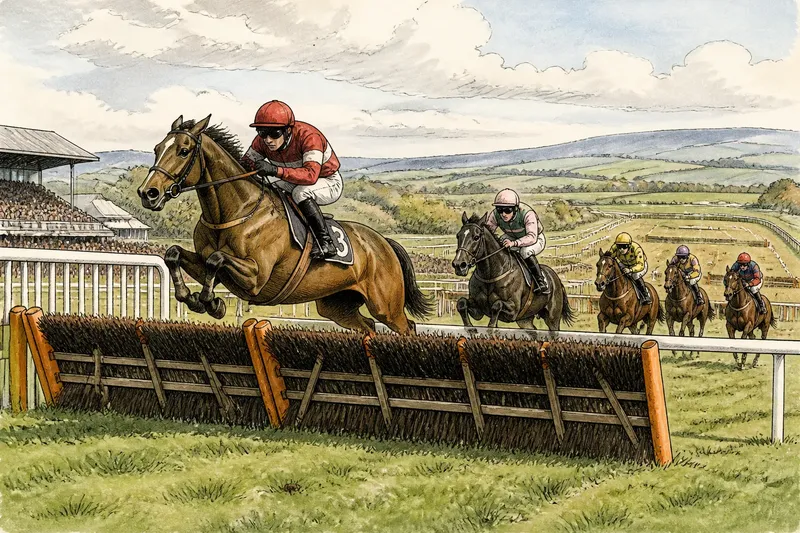
What changes when a race is run over hurdles? In a hurdle race, horses gallop along the course and jump a series of obstacles; the repeated shift between running and jumping gives the contest its distinctive demands and rhythm.
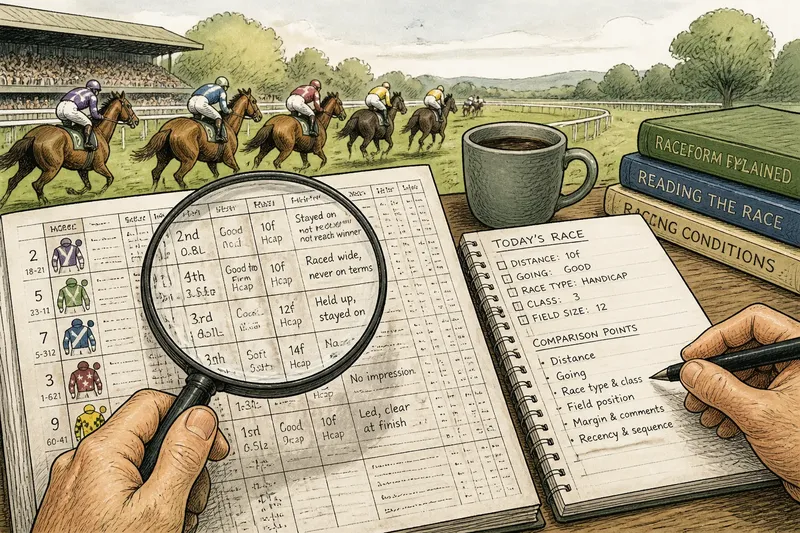
The racecard offers the clearest way to identify the format. A flat race has no jumps, a hurdle race uses hurdles, and a steeplechase features larger, more substantial fences. Those distinctions help you know what to watch for before the runners reach the first obstacle.
Hurdles make each approach part of the race
In British and Irish jump racing, a hurdle is a fence-like obstacle, commonly built around a frame covered with brush. Hurdles are generally lower and more yielding than steeplechase fences. Horses are expected to clear them, but a contact can disrupt a jump or the stride that follows.
The approach matters as much as the clearance. A horse needs to reach the hurdle in a position that allows it to jump and continue forward; the jockey guides its line and pace. After landing, horse and jockey return to the gallop and prepare for the next section of the course.
Watch one runner rather than trying to follow every horse at once. Notice where it is in relation to the hurdle, whether it clears cleanly, and how it moves away after landing. That gives you a simple way to read the action without treating a single jump as a verdict on the whole race.
Hurdle races occupy a distinct place among race formats
Flat racing centres on running without obstacles. Hurdling combines a sustained gallop with a sequence of hurdles. Steeplechasing also combines running and jumping, but its larger fences make the obstacles a more prominent feature of the course.
These formats are different kinds of contest, not a straightforward scale from easy to difficult. Pace, distance, ground and the demands of a particular course all shape how a race unfolds. If you are choosing what to watch, use the racecard to see which format is scheduled, then decide whether you want a race without jumps, one with hurdles or one featuring larger fences.
Say you have the racecard for a meeting open and want to choose between two upcoming races. One is listed as a hurdle race and the other as a steeplechase. If you want to follow lower obstacles and the running between them, choose the hurdle race; if larger fences are what interest you, choose the steeplechase. The result is a clear viewing choice based on the format, not a prediction about which horse will win.
Distance and ground affect the demands of a hurdle race
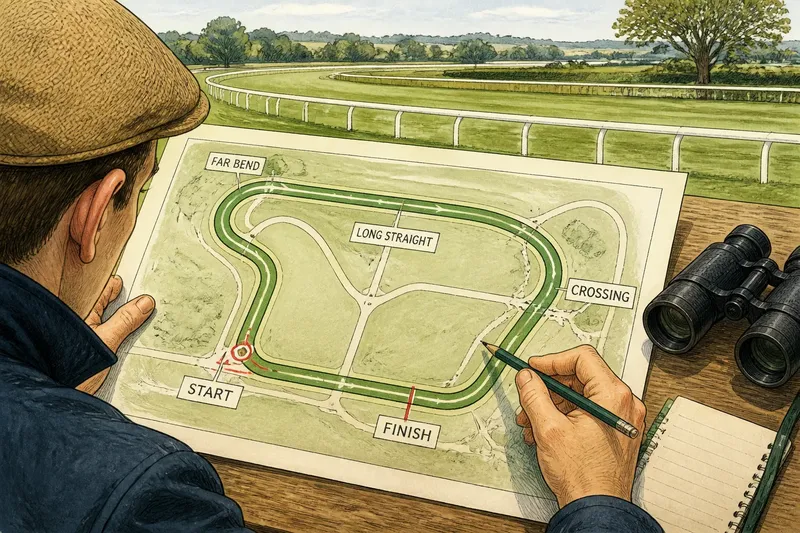
A hurdle race takes place over a course with its own route and obstacle layout. The number and spacing of hurdles depend on the course and race conditions, so do not assume that every event uses an identical arrangement. The race information can tell you what applies to the particular contest.
Distance shapes how much running and jumping the horses must combine over the route. Ground conditions also affect the feel of the surface underfoot. These details can help explain why the same basic format may look different from one race to another, but the word “hurdle” alone does not tell you how a particular contest will unfold.
Which details help you follow a hurdle race?
How can I tell a hurdle race from a steeplechase?
Check the racecard first: it identifies the race type without relying on a distant view. On the course, hurdles are generally lower and more yielding than the larger fences used in steeplechases.
Why might a runner lose ground at a hurdle?
An awkward approach, a less fluent clearance or an unbalanced landing can interrupt a horse’s forward movement. Other runners may continue at pace, changing the spacing between them.
Does every hurdle race use the same obstacle layout?
No. The course and race conditions determine the route and placement of obstacles. Check the details for the specific event rather than assuming the layout is identical from race to race.
Use a simple viewing routine to follow the format
Before the start, check the racecard for the race type and course details. Once the horses are under way, choose a runner and follow its approach to a hurdle, clearance, landing and return to the gallop. Repeat that sequence at the next obstacle and notice how the runner’s position compares with the horses nearby.
- Race type: If the racecard says “hurdle”, expect hurdles; if it names another format, use that listing to set your expectations instead.
- Obstacle shape: If the obstacles look like lower, brush-covered hurdles, watch the runners’ approaches; if they are larger fences, check whether the racecard identifies a steeplechase.
- Approach: If your chosen runner keeps its line towards the hurdle, follow its clearance; if it changes line or loses position, watch how it responds after landing.
- Clearance: If the horse passes over without an obvious interruption, keep tracking its next stride; if the jump looks awkward, check whether its pace or position changes afterwards.
- Landing: If the runner lands and continues smoothly, move your attention to the next section; if it appears to lose balance or ground, observe whether it settles back into the gallop.
- Course details: If the race information gives a route or obstacle layout, use it to understand what is ahead; if it does not, avoid guessing and focus on the hurdles visible from your viewing point.
Some details are not worth the effort on a first viewing. There is little benefit in trying to memorise specialist jump terminology or drawing a firm conclusion from one imperfect clearance. Following the same horse through each approach and landing is a more useful starting point.
The main search phrase, “hurdle race format”, describes a contest built from galloping and repeated jumps. Keep that pattern in mind, and the obstacles become easier to read as part of the course rather than as isolated moments. A glance at the racecard before the start can also settle the basic question of which kind of race you are watching.