How Paddocks and Parade Rings Became Part of Race-Day Viewing
Learn how paddocks and parade rings became part of race-day viewing, and why their roles still vary between courses and racing traditions.
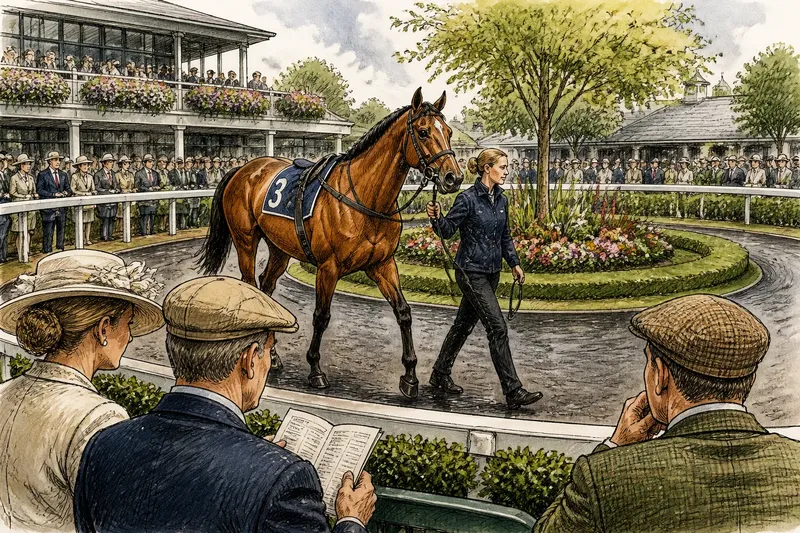
Why do some racecourses have a paddock, a parade ring, or both? The history of paddocks and parade rings is tied to a simple change in the race-day experience: horses came to be presented in spaces where spectators could see them before the start.
Horse presentation became part of the public occasion
Before dedicated viewing spaces, people watched races from whatever the ground and meeting arrangements allowed: a trackside boundary, a natural rise or a place overlooking the course. There is no single documented starting point for the paddock or parade ring as a public feature, and the terms and layouts developed differently from one venue to another.
As racecourses established more formal facilities, they could set aside areas for horses before a race and give spectators a place to gather around them. The practical purpose was clear: handlers needed room to move horses, while visitors wanted to see the runners before they went to the track. The arrangement also made the interval before a race a social part of the meeting.
Grandstands addressed a different need. They raised spectators above the course and offered a view of the contest, while enclosures organised access to particular parts of the venue. These features grew alongside one another rather than replacing a single, universal way of watching.
Paddock and parade ring remain local terms
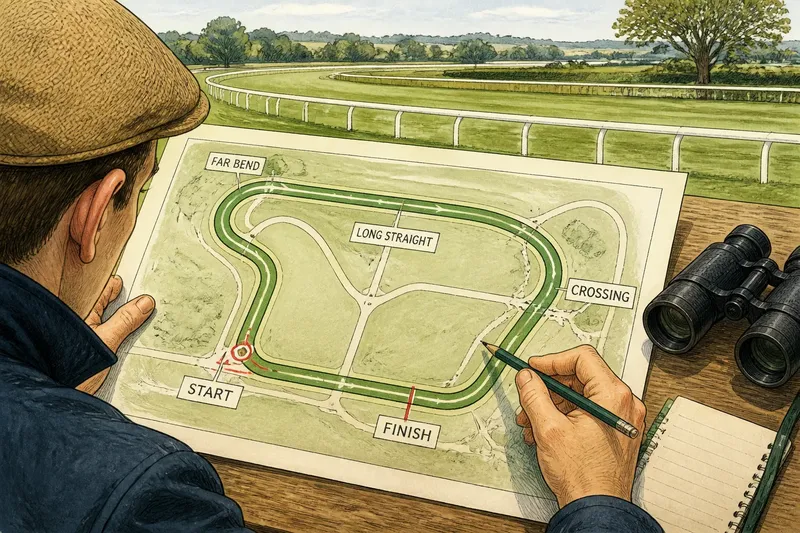
At many courses, the paddock is where horses gather before a race, and the parade ring is the enclosed space where they walk for spectators. Some venues use the terms differently or have a pre-parade area as well. The course map and signs are more reliable than assuming every meeting follows the same vocabulary.
The layout reflects both custom and the work that takes place there. A ring must leave room for horses, handlers and officials, while allowing spectators an appropriate place to watch. Boundaries and access rules help separate those tasks from public viewing; they are not merely decorative features.
That mix of practical and social purposes explains why the ring can feel central at one meeting and less prominent at another. Its position, the route to the track and the venue’s access arrangements all affect how people use it.
Course layouts shape what spectators gather to see
A parade ring brings attention to the horses before they race. A stand gives a raised perspective on the contest, while a rail-side position offers a close view as runners pass a particular part of the course. These are distinct ways of watching, not stages in a universal progression from old-fashioned to modern.
Local habits add another layer. At one meeting, visitors may gather around the ring and talk through the runners’ preparations; elsewhere, the grandstand or trackside may be the natural meeting point. The balance can change within the same venue according to the fixture and the crowd.
It is not worth treating one area as the historically correct place to watch. A course’s own signs and customs tell you more than a general rule can, and practical access matters as much as tradition.
How do paddock and parade-ring customs vary?
Is a paddock always a parade ring?
No. Some courses use the terms for overlapping spaces, while others distinguish the paddock, parade ring and pre-parade area. Follow the venue’s map and signs to learn what each space means there.
Why do spectators gather around the ring?
The ring gives people a shared place to see horses before a race, while handlers and officials carry out the pre-race routine. Its social role grew alongside that practical purpose.
Why do some courses have a separate pre-parade area?
Course layouts and routines differ, so some venues use an additional space before horses enter the parade ring. Check local information rather than assuming the sequence is the same everywhere.
Did grandstands replace paddocks?
No single pattern applies across racecourses. Stands and horse-viewing spaces serve different purposes, and venues developed arrangements that suited their grounds and customs.
Local details make the history easier to read
Say a visitor arrives at a course whose map marks a pre-parade area and a parade ring. They check the signs, see that spectators may stand around the ring, and notice a separate route leading towards the track. The useful answer is not that every course uses those spaces in the same way; it is that this venue has made horse presentation, public viewing and movement to the race distinct parts of its layout.
That is the lasting point of paddocks and parade rings: they show how a race meeting can be organised around more than the start and finish. The next time you see one, its position and boundaries offer clues to the course’s particular balance of horse-handling, spectator access and local tradition.